Safety Deposit Box Cost
Where do you keep your birth certificate? Passport? Maybe you are finding it harder to trust the bank with anything these days, and even have your cash stuffed in the mattress. However, there are still plenty of good reasons to keep some of your most vital documents locked up under the watchful eye of the bank.
- Safety Deposit Box Cost Per Month
- Safety Deposit Box Costs Bank Of America
- Cost Of Safety Deposit Box At Chase
- Safety Deposit Box Cost Us Bank
- Safety Deposit Box Costs At Bank Of America
There are some drawbacks, of course, to having your access to important items and papers somewhat restricted and only accessible during bank hours, so you need to know which things to keep close to home and which ones you can manage without for a few days.
Some are quick to point out other problems that can arise when you don’t take matters into your own hands, but we will help you make your own choice and decide if a safe deposit box at least beats the mattress and a plastic filing cabinet for security, or at least point you to some basics for safer storage within your home.
Opening a Safe Deposit Box
Most banks and credit unions offer the service, and may even give discounts to existing customers, so start with your current bank. It is really important to plan ahead and give permission to someone you trust to access the safe deposit box or at least have an executed power of attorney that allows them to easily get to the contents.
This is especially important in case of death so that important papers and heirlooms can be accessed without delays. Consult with an attorney to determine state laws that affect the ability of your loved ones to gain access if you have reasons for not granting them access while you are alive.
The annual cost will typically range anywhere from $30 to $75 and you should also contact your insurance agent because the contents are not covered by the generous new $250,000 in FDIC coverage that you get, and most causes for loss within the bank will not be deemed to be the bank’s responsibility. Because neither the bank nor the insurance company will likely cover flood damage, make sure to put all contents in sealed plastic bags.
- Access your box regularly and keep a list of what it contains. Make sure you choose the right size based on the items you plan to store. Determine who's allowed to access the box. Keep the key(s) to the box in a safe place that you'll remember. Note: The contents of a safe deposit box are not insured by the institution that provides it.
- A safety deposit box is a special storage compartment you can rent at a bank. You can use it to store important documents and items that you do not feel safe keeping in your home. You may even decide to store some of your spare cash in the safety deposit box in case you ever hit a rough spot.
- Lovndi Electronic Security Safe Box, 0.17 Cubic Feet Digital Deposit Box for Home Office Hotel Business, Lock Box for Cash Jewelry Storage, Black 4.3 out of 5 stars 489. $32.99 - $34.99 #5. Stalwart 65-E17-B Electronic Deluxe Digital Steel Safe, Black 4.4 out of 5 stars 349.
- How much is a safe deposit box at the post office. The price of Post office boxes depend on the size. You can choose a post office box that suits the amount of mail you receive:.Small box: 90mm x 130mm, ideal for personal mail.Medium box: 135mm x 130mm, suits most small to medium businesses.
Branches A bank branch is a brick and mortar location where your banking can be done in person. You might pop into a branch for a roll of quarters or a cashier’s check you need right away. You may want to rent a safety deposit box to store valuables or important documents.
What You Should Put in the Safe Deposit Box
A good rule of thumb to keep in mind that is grounded in common sense is to view your safe deposit box as the repository for stuff that you really need, but will not likely ever need on a moment’s notice. Items that are a pain to get replaced such as birth certificates and other family records definitely belong here.
Another important item to remember for insurance purposes is a videotape of your home’s content for insurance purposes, and a copy of this video definitely belongs in your safe deposit box. Contracts, stocks, bonds, certificates of deposit, original deeds to property, collectibles and rare jewels are also commonly kept in safe deposit boxes. If your grandmother gave you a pouch of diamonds or if you have negatives from your honeymoon that aren’t safe for the film lab then lock it all up at the bank! For that matter, you can put just about anything you want in the box.
What Does Not Go in My Safe Deposit Box?
There are plenty of things that obviously do not belong in the safe deposit box that we do not need to go into for the sake of brevity i.e. food, pets and cash you are hiding to dodge paying taxes, although the latter is certainly a common but unethical choice.
You certainly can place copies but should never put originals or your only copy of medical care instructions, burial preferences or original Power of Attorney documents. Further, if you live your life like you are starring in Bourne Supremacy (or simply have friends and family overseas that you would visit in an emergency), you definitely don’t want your passport locked up overnight, let alone a three-day weekend.
You Don’t Understand Me…There Is No Way I Am Keeping My Valuables at the Bank
Would you rather just bury it all in the backyard? If the thought of a bank robbery or putting your great-grandfather’s watch in a dark box somewhere makes you simply too uncomfortable, then it is time to shop for a fireproof safe and make sure that you get adequate insurance coverage to keep these items in your home. If you purchase an inexpensive safe, you might end up regretting the move as many of these safes only withstand an hour in a fire – not good if your videotape of the home’s contents gets melted in a fire in said home.
However, there are some heavy duty safes that can only be hacked into by Tom Cruise that will also give you the necessary levels of protection (UL125) to protect your computer data. You can check here and here for more information on choosing a fireproof safe, and make sure that you don’t buy a safe that is too small to contain any gold bars you plan on purchasing in the next few years.
So, remember to either get the safe deposit box along with a separate insurance policy, or do some research and get a fireproof safe that will protect digital information and film negatives (not just your paperwork) and insure the contents. Make sure that you are protected – this is not an item to put on the “vague list of important stuff to eventually take care of down the road.”
Sign up for Mint today
From budgets and bills to free credit score and more, you’ll
discover the effortless way to stay on top of it all.
Safe deposit boxes are making a comeback, with normal people now able to access facilities previously reserved for Bond villains.
Where’s safer than a sealed box in the middle of a bank?
Whether portrayed in films, such as The Bank Job, or in the £200m Hatton Gardens heist in 2015, safe deposit boxes have an aura about them.
We imagine boxes full of diamonds, cash or compromising photographs; the property of the super-rich or those with something to hide.
Yet it’s very easy to get a safe deposit box and it could cost as little as your broadband subscription.
Boxes are back in fashion

Previously, if you had a valuable item you didn’t want to store at home, you’d ask the bank manager to put it in the vault.
That presented several problems, explains Iain Kirkpatrick, managing director of retail banking at Metro Bank.
Firstly, you didn’t actually see your possessions go in the vault; even worse “their record keeping wasn’t good enough, so people lost touch with their possessions; if somebody died then people wouldn’t know the bank was holding something for them.”
Faced with the cost and effort of providing vault storage or safe deposit boxes, cost-cutting banks stopped providing them, including Barclays, Lloyds, NatWest and the Cooperative bank in 2015.
Yet the past few years have seen numbers rebound. Every Metro Bank branch has one, with new branches regularly opening, and Halifax and Lloyds have also opened flagship stores with safe deposit boxes.
In an age where our wealth and possessions are increasingly virtual, who is using these boxes and what are they storing?
What’s in the box?
The second part of that question is difficult to answer, because at Metro Bank, among other providers, you’re not usually required to reveal exactly what you’re storing.
There are limits, however; you won’t find boxes of cash or risque photographs because both are prohibited under the Bank’s rules. Also off the table are weapons, food and anything else that could go off – although one customer apparently uses his box to store gym kit.
Safe deposit box customers are varied, although two important groups are families of South Asian descent and local businesses.
Safety Deposit Box Cost Per Month
South Asian couples are often gifted golden jewellery on their wedding day, whilst businesses are drawn to the boxes by the permanence, given the risk of cyber security, explains Kirkpatrick: “Data is becoming more and more something people want to protect.”
The risk of a burglary is also driving people to safe deposit boxes: £274 million of jewellery was stolen in 2017, according to Direct Line, whilst Metro Bank found a quarter of us store valuables in filing cabinets or drawers.
According to Kirkpatrick, “there are a number of areas where the police and neighbourhood watch have recommended that people find somewhere safe to keep their belongings because of the crime rate.”
“It’s reassurance. If there’s a gap in the market, it doesn’t mean there isn’t a market.”
How much they cost
At Metro Bank, safe deposit boxes currently start at £200 a year, for the smallest box (pictured on the right), going up to £675 for the largest box (pictured on the left), although these prices will rise in October.
You’ll need to get a Cash or Current Account – both are free, although the Current Account involves a credit check – and insurance isn’t included.
You don’t need to use a bank and it’s possible to find local providers who offer boxes for considerably less, although the number of visits may be restricted. The Safe Deposit Association has a list of providers in the major cities.
Using a safe deposit box may reduce the premium you’ll pay to insure the item, and this is worth factoring into the cost (you should always note valuable items separately on your insurance).
It’s always good to compare home insurance options to get the right cover at the lowest cost – you can read our guide to home insurance here.
Safety Deposit Box Costs Bank Of America
Into the vault
While useful, the attraction of a safe deposit box, unlike a bank account, is that you can actually go and see it.
I visited Metro Bank’s Holborn Branch and its safe deposit vault.
Cost Of Safety Deposit Box At Chase
The vault lacked many of the clichés from the movies: I didn’t have to pass through an airlock or iris scanner and the door was made of (presumably toughened) glass. You're not even required to provide ID, as the bank keeps your photo on file.
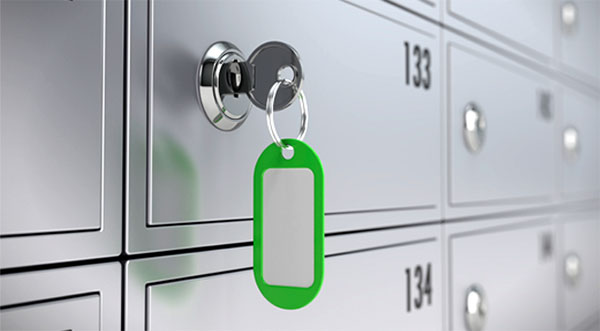
Once you’re inside, however, you can’t help but be awed by the rows of silvery numbered boxes from floor to ceiling.
Safety Deposit Box Cost Us Bank
Opening a box requires two keys simultaneously, one held by the Bank and one by the owner, who can inspect the box in a private room.
The boxes are surprisingly spacious and even the second-smallest box could easily fit my sole valuable possession.
Safety Deposit Box Costs At Bank Of America
The whole experience is remarkably relaxed – nothing close to airport security – which, Metro Bank believes, is part of the attraction.